
A tenants liability insurance definition starts with a simple idea: this is the part of a renters policy that may help when an insured tenant is legally responsible for covered injury to another person or damage to someone else’s property. It is not a promise to pay every demand, and it does not insure every part of a rented home. The policy’s liability wording, exclusions, limits, and facts of the incident all matter. In Louisiana, a lease, a building’s condition, severe weather, and the cause of damage can raise practical questions about where a tenant’s responsibility begins and ends.
Request a renters coverage review
Ask us to explain your liability options
We are an independent Louisiana insurance agency. We can compare available carrier options and help you review how the liability section fits with the rest of a policy. This guide provides general information, not a coverage decision or legal advice. The contract, endorsements, claim facts, and applicable law govern any particular situation.
What does tenants liability insurance mean?
Tenants liability insurance is a common way to describe the personal liability protection included in many renters policies. Depending on the contract, that protection may apply when a covered claim alleges that you or another insured person caused bodily injury or property damage through an accidental act or omission. It may also include a duty for the insurer to investigate and defend a covered claim, subject to the policy wording and conditions.
The phrase may not appear as a formal coverage name on a declarations page. Instead, look for headings such as “personal liability,” “family liability,” or “liability coverage.” The declarations page shows selected limits and policy details, but it does not contain every rule. Read the insuring agreement, definitions, exclusions, conditions, and endorsements that apply to the liability section.
Liability is different from protection for your own belongings. Personal property coverage may apply to your furniture, clothing, electronics, and other possessions after a covered cause of loss. Liability coverage addresses certain claims made against an insured by someone else. A limit shown for personal property is not the liability limit, and neither one replaces the other.
How can personal liability apply to a renter?
A liability question often begins when someone alleges that a tenant’s conduct caused an injury or damaged property. For example, a guest might claim that a tenant failed to address a known hazard inside the unit. A household member might accidentally damage a neighbour’s belongings. Smoke or fire from a cooking incident might affect another unit. These examples help explain when liability could be relevant, but they do not establish that a policy will cover a particular loss.
The insurer may need to determine whether the person making the claim is seeking damages for a covered injury or damage, whether an insured is legally responsible, and whether an exclusion or condition applies. A demand letter is not, by itself, proof of liability or proof of coverage. The insurer’s investigation and the policy language matter.
Personal liability can sometimes apply away from the rented home, subject to the policy’s definitions and exclusions. A tenant may accidentally damage someone else’s property while visiting, for instance. The contract determines who qualifies as an insured, what locations are covered, and which property or activities are excluded. Do not assume that a roommate, guest, household member, or off-premises incident is treated the same way under every policy.
What does a liability limit represent?
The liability limit is generally the most the insurer will pay for covered damages under the relevant coverage, subject to the policy. It is not a promise that the insurer will pay the amount a claimant requests. A claim can involve fact gathering, defence, negotiation, settlement, or a court proceeding. How defence costs and other supplementary payments are handled depends on the contract.
When comparing limits, consider your household, visitors, activities, and the potential impact of a serious claim. Ask whether the displayed limit applies per occurrence or in another way, whether separate sublimits apply, and what payments may be outside that limit. A larger limit is not automatically the right choice for every renter. Review available options in the context of your circumstances and budget, without assuming any limit covers every possible loss.
What is damage to premises rented to you?
Damage to premises rented to you is a specific liability issue involving the part of a property you occupy under a rental arrangement. Some renters policies include a limited provision that may apply to certain accidental damage for which the tenant is legally responsible. The exact definition of rented premises, covered causes, exclusions, and any separate limit vary by contract.
This provision is not the same as building insurance. It does not automatically make a tenant responsible for the whole structure, nor does it insure every repair or maintenance expense. Normal wear, gradual deterioration, neglected maintenance, intentional damage, and some types of water loss may be treated differently from a sudden accidental event. The policy may also contain a separate deductible or sublimit.
Consider a renter who accidentally starts a kitchen fire while cooking. If the fire damages cabinets in the rented unit, a landlord may seek payment from the tenant. The tenant’s liability coverage could be relevant, but the insurer still needs to review the cause, legal responsibility, and policy terms. Compare that with a slow leak that developed over time. Questions about maintenance, notice, building systems, the lease, and policy exclusions may lead to a different analysis.
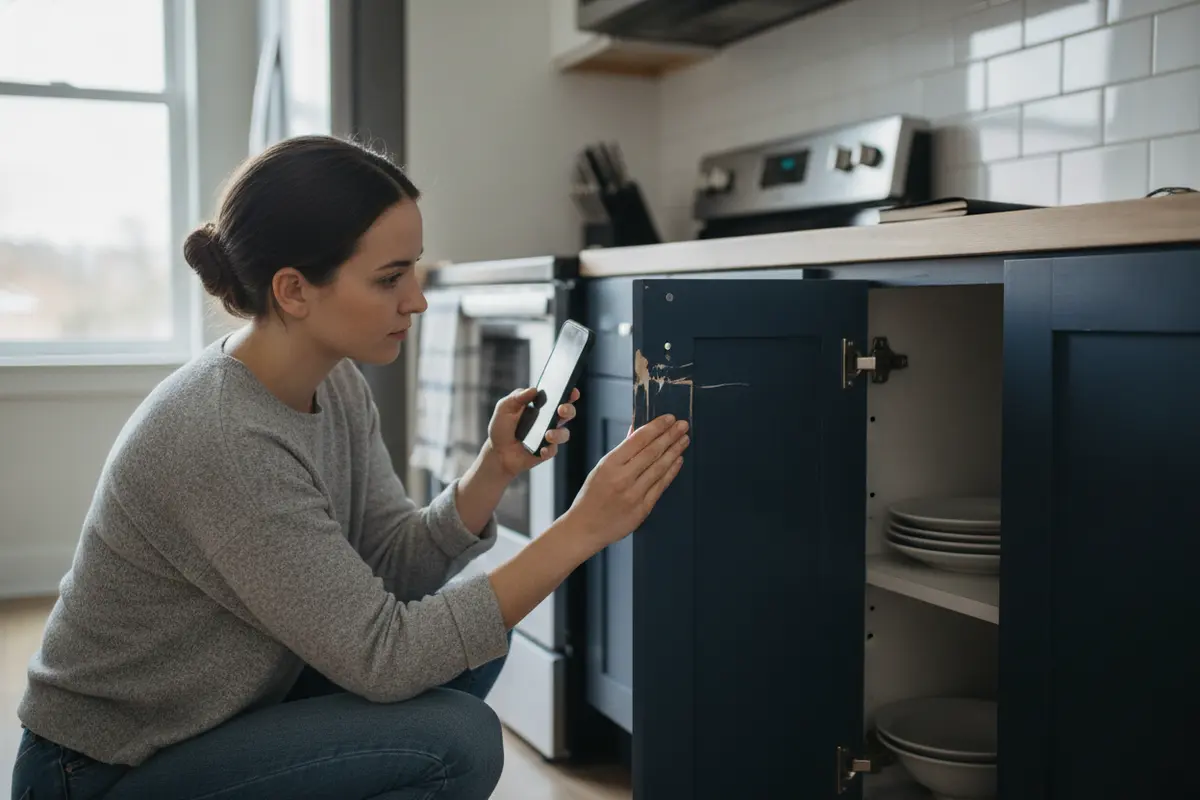
If you receive a demand from a landlord or property manager, keep the notice and related messages. Report the matter according to your policy instructions and provide the insurer with the information requested. Avoid making assumptions about who is responsible or agreeing to a payment before the facts and coverage have been reviewed. You can remain cooperative while leaving the liability and coverage assessment to the appropriate parties.
How do landlord and tenant responsibilities differ?
Your lease is an important record of the duties you agreed to, but it is not an insurance contract. It may address maintenance, repair reporting, smoke alarms, plumbing, locks, pets, alterations, and damage caused by a tenant or guest. Applicable law may also affect a landlord’s or tenant’s obligations. Insurance does not remove those responsibilities, and a lease cannot expand the coverage promised by an insurer.
| Situation | What to identify | Policy question |
|---|---|---|
| Damage to your furniture or clothing | The tenant owns the belongings | Does personal property coverage apply to this cause of loss, subject to limits and deductible? |
| Accidental damage to the rented unit | Cause of damage and tenant’s legal responsibility | Could personal liability or a damage-to-premises provision apply? Is there a separate limit? |
| Roof, exterior wall, or building-system repair | Lease terms, property ownership, and who handles maintenance | Is the request about a building obligation that the tenant policy does not insure? |
| Injury to a guest | What happened, the condition of the unit, and the people involved | Could personal liability respond, or does a policy exclusion apply? |
| Rising water or storm surge | Cause of water and whether belongings or the building were damaged | Does the renters policy exclude flood, and should separate protection be discussed? |
This comparison is a starting point, not a determination of fault or coverage. A landlord’s building policy generally protects the landlord’s insurable interest in the building. It is not a substitute for a tenant’s belongings coverage, and it does not settle every claim involving a tenant. A renters policy usually does not insure the landlord’s entire building.
Before signing a lease, note any insurance requirement and ask what documents the landlord needs. Check whether the lease specifies a liability limit, proof of insurance, an additional interest, or other wording. Then ask an insurance professional whether the request can be met under an available policy. A certificate or declarations page does not change the underlying contract.
What else may a renters policy include?
A renters policy can combine several different coverages. Personal property coverage may apply to covered damage or loss to belongings. Loss-of-use or additional-living-expense coverage may help with certain increased costs when a covered loss makes the home uninhabitable. Personal liability may address covered claims against an insured. Medical payments to others may provide a limited payment for certain injuries, according to the policy.
Each section has its own terms. A sudden and accidental water event may be treated differently from gradual seepage. Theft coverage can have conditions and category limits. Flood, earth movement, intentional acts, and business property may be excluded or limited unless policy wording or an endorsement provides otherwise. Do not infer that a peril is covered simply because it is mentioned in a general policy description.
Louisiana renters should ask how the policy treats wind, wind-driven rain, rising water, and storm surge. Those causes may not be treated alike. Many renters policies exclude flood damage, so ask about the contract and any separate options before a storm threatens. The New York Department of Financial Services offers a general renters insurance consumer guide describing common coverage distinctions. It is not Louisiana-specific guidance, and your own policy wording controls.
For broader household questions, you can also review our family insurance resources and insurance coverage information. Those pages do not replace a review of the renters contract or a separate discussion of flood coverage.
Which exclusions and limits deserve a closer look?
Exclusions and limitations define the boundaries of a policy’s promise. Rather than relying on a general list, locate the exclusions in your own contract and ask how they apply to your household. Issues worth reviewing can include:
- Intentional injury or deliberate property damage.
- Business or professional activity conducted from the rented home.
- Motor vehicle ownership, use, or maintenance, which is generally addressed under an auto policy.
- Damage to property owned, occupied, rented, or controlled by an insured, subject to any specific rented-premises provision.
- Injury to a household member or another person who qualifies as an insured.
- Animals, watercraft, recreational equipment, or valuable property that may have special terms.
- Flood, earth movement, wear and tear, neglect, or other causes listed in the policy.
Exclusions are not identical across insurers. An endorsement may change a limitation or add a type of protection, but it has its own wording, conditions, and limits. Tell your agent if you work from home, operate a business, rent out part of the home, own a pet, or keep expensive equipment there. An insurance review for business needs may be relevant if your work or business property is not adequately addressed by a personal policy.
How can you prepare before a liability claim?
Organised records can help you explain what happened and identify which documents may matter. They do not guarantee coverage or determine responsibility. Keep a copy of your lease, declarations page, policy forms, endorsements, and notices from the property manager. Store important records somewhere they will remain accessible if the rented home is damaged.
- Write down the date, time, location, and basic sequence of events while details are fresh.
- List the people involved and note how to contact them, if appropriate.
- Take photographs of the scene and damage when it is safe to do so.
- Take reasonable steps to prevent additional damage, but do not attempt unsafe repairs.
- Keep receipts and a brief record of emergency work or temporary expenses.
- Notify the landlord or property manager as the lease requires.
- Report a possible claim promptly under the policy and respond to reasonable information requests.
- Send legal papers or a formal demand to the insurer promptly, following the policy’s instructions.
Do not discard damaged property unless safety or another urgent need requires it. If you must move or dispose of something, photograph it first when possible and keep a note of why. Do not agree to a settlement or make a promise on the insurer’s behalf. If an emergency requires immediate work, focus on safety and preserve relevant receipts and communications.

What should you check during a policy review?
Start with the declarations page, then match each item to the full policy wording. Confirm the named insureds and address. Check the personal liability limit, personal property limit, deductible, policy dates, and any endorsements. If a roommate has moved in or out, ask whether the listed insureds and household details remain accurate. Do not assume that everyone who lives in the unit is automatically insured.
Next, compare the lease with the insurance documents. Identify who handles routine maintenance, how quickly you must report a problem, and what proof of insurance the landlord requests. Ask whether a provision about tenant responsibility affects your exposure, and whether a separate limit applies to damage to premises rented to you. An agent can explain the insurance language, while questions about what a lease legally requires may need a qualified legal professional.
Think through realistic scenarios instead of reviewing limits in isolation. What if a guest is injured? What if cooking smoke damages another unit? What if a pipe leaks slowly, or a storm sends water into the building? For each scenario, identify the property involved, likely cause, potentially responsible parties, and policy section to ask about. The exercise does not predict a claim outcome, but it makes gaps and unclear wording easier to discuss.
When a household change creates other insurance questions, it can help to review related coverage as well. For example, see our information about auto insurance if your household or vehicle situation has changed. For a wider look at available lines, visit our coverage resources. These links are for general information, not a statement that one policy covers another policy’s risks.
How do we help review tenants liability insurance?
We begin with the rented property, the lease requirements, and the people in the household. We ask about pets, home-based work, valuable property, and changes that could affect who needs to be insured. Then we review the liability limit, personal property coverage, deductibles, endorsements, exclusions, and any separate wording for damage to rented premises.
As an independent agency, we can compare available carrier options rather than treating one company’s form as the only choice. We explain differences we identify and help you frame questions for the insurer. We cannot promise that a future claim will be covered or that the same terms will be available to every renter. Policy forms, underwriting, and the facts of a loss matter.
Our home insurance information may help you understand the distinction between a building’s coverage and a tenant’s policy. A landlord’s policy and a renters policy serve different interests. If you want to discuss your own situation, contact us through our Louisiana insurance agency contact page.
What questions should you ask before choosing coverage?
- What liability limit is available, and how does the policy apply it to a claim?
- How does the contract define an insured, an occurrence, and premises rented to you?
- Is damage to the rented unit subject to a separate limit, deductible, or exclusion?
- How are flood, storm surge, wind-related damage, and water backup treated?
- How does the policy address a guest, child, roommate, household member, or pet?
- Could working from home or owning business equipment require another policy or endorsement?
- What documents does the landlord need, and do the policy documents meet that request?
- How should you report an incident, demand, or legal notice?
These questions are useful when you move, renew a lease, add a roommate, adopt a pet, or acquire valuable property. They can also help you prepare for an annual review. Bring the lease and policy documents so the discussion can focus on the actual wording rather than general assumptions.
Request a personal liability policy review
Frequently asked questions
Is tenants liability insurance the same as renters insurance?
No. Tenants liability insurance usually refers to the personal liability part of a renters policy. Renters insurance may also include personal property, loss of use, and other coverages. Review the whole contract, not only the liability limit.
Does tenants liability insurance cover damage to a landlord’s property?
It may apply to certain damage to premises rented to you when the claim fits the policy and the tenant is legally responsible. Limits, exclusions, deductibles, and definitions apply. The insurer must evaluate the specific facts and wording.
Does a landlord’s insurance cover a tenant’s belongings?
A landlord’s building policy generally protects the landlord’s interest in the building. It is not ordinarily a substitute for a tenant’s personal property coverage or liability protection. Ask how the two policies differ for your circumstances.
Does renters liability coverage include flood damage in Louisiana?
Many renters policies exclude flood, and rising water or storm surge may be treated as flood-related. The exact result depends on the policy and cause of loss. Review the wording and ask about separate protection before severe weather becomes an immediate concern.
Can a general definition tell me whether a claim is covered?
No. A definition explains the general purpose of a coverage, but the policy contract, endorsements, exclusions, claim facts, and applicable law determine how a claim is handled. Report a possible claim promptly and let the insurer investigate.
Understanding the tenants liability insurance definition gives you a useful starting point, but checking your lease and actual policy wording is the practical next step for a Louisiana renter.


